
Media Statement No. 50-2026_SUHAKAM Welcomes Move to Abolish AUKU, Urges Rights-Based Reform of Higher Education
KUALA LUMPUR (18 AUGUST 2026) – The Human Rights Commission of Malaysia (SUHAKAM) welcomes the announcement by Prime Minister Datuk Seri Anwar Ibrahim of the Government’s intention to abolish…
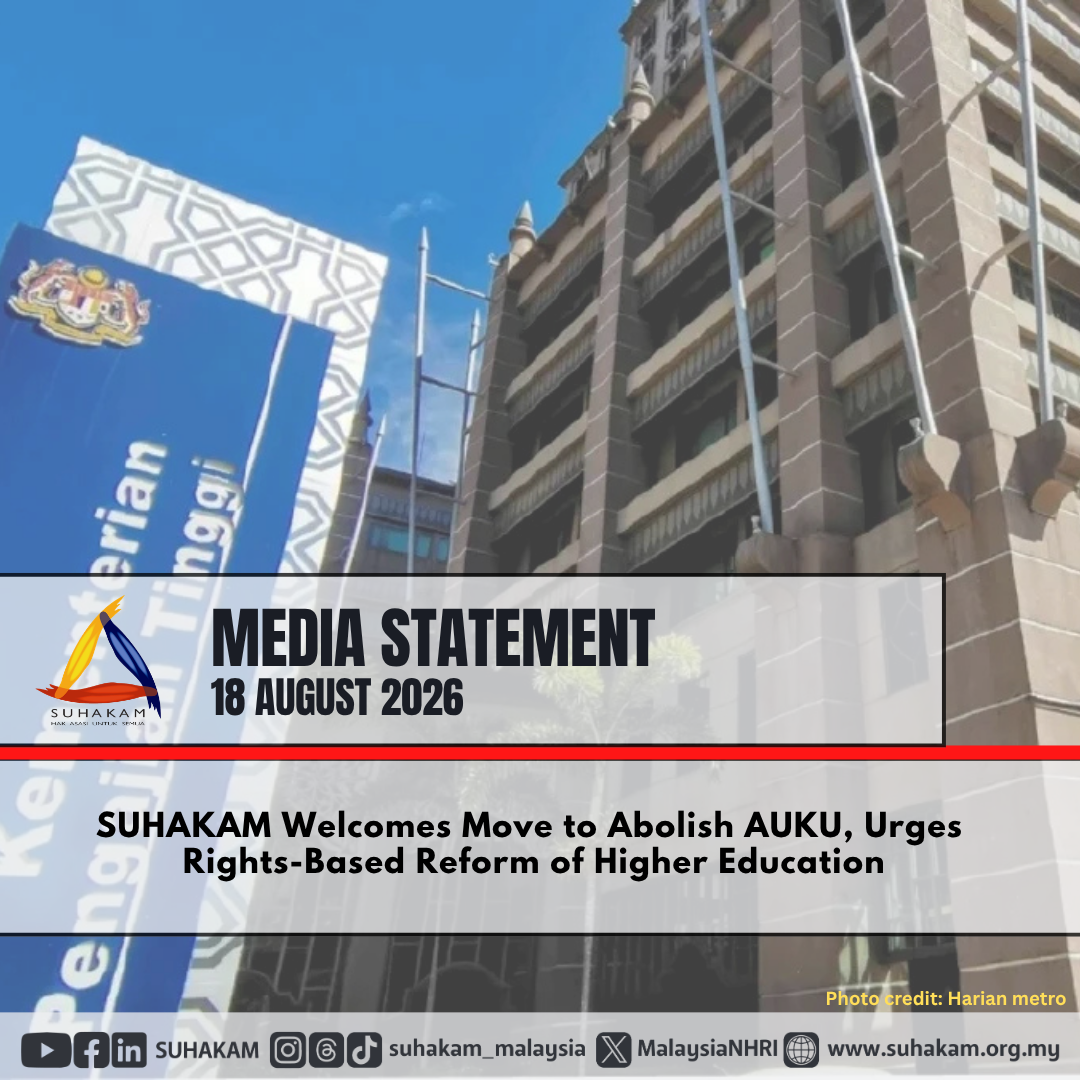
SUHAKAM welcomed the prime minister’s announcement that the government intended to abolish the Universities and University Colleges Act 1971. It described the move as an opportunity to strengthen academic freedom, institutional autonomy, expression, association and meaningful student participation.
The commission recalled the Court of Appeal’s majority decision in Muhammad Hilman Idham and others v Government of Malaysia, which found a former restriction on students expressing support for or opposition to political parties unconstitutional.
That judgment affirmed that students retain constitutional rights at university and that restrictions on speech require a reasonable connection to public order or morality. SUHAKAM argued that universities should develop critical thought and responsible public participation.
Repeal should be treated as a reform of the relationship between the state, universities, academics and students, not merely deletion of one statute. Institutional independence needs to be accompanied by transparency and accountability.
Because AUKU underpins the establishment and governance of public universities, transition arrangements will be required. Those arrangements should preserve administration without reproducing restrictions on fundamental freedoms under another name.
Any replacement framework should be prepared through meaningful consultation with students, academics, university leaders, civil society and other affected groups. Limits that remain should be lawful, necessary and proportionate.
Protection should extend to teaching, research, publication, exchange of ideas, public commentary, peaceful assembly and association. Institutional autonomy should balance responsibility for public resources with safeguards against undue interference in academic matters.
SUHAKAM concluded that repeal after more than five decades should produce substantive cultural and legal change, allowing universities to be places where ideas are challenged and students are prepared to contribute critically to society.